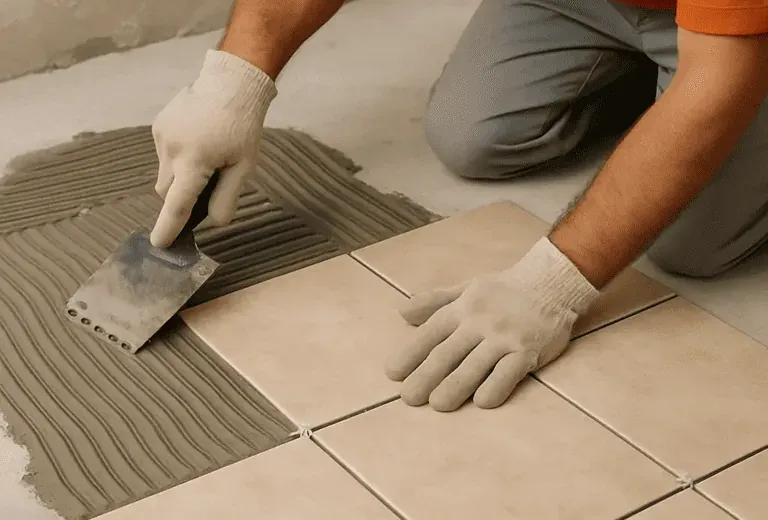
Bathroom tiles have to do more than look attractive. Unlike many other areas of a property, bathrooms regularly experience water, humidity, cleaning and changes in surface conditions.
For this reason, successful bathroom tile installation in Dubai depends on the complete system behind the finished tiles, including substrate preparation, waterproofing, drainage, tile layout, adhesive application, grouting and finishing.
In this guide, Wavex Technical Services explains the important stages of bathroom tiling and some of the common mistakes property owners should understand before starting a bathroom renovation.
Quick Answer: What Is Important When Installing Bathroom Tiles?
Bathroom tile installation should start with a sound and properly prepared substrate, suitable waterproofing where required, correctly planned drainage and an appropriate tile installation system. Tile size, layout, adhesive, grout joints and penetrations around plumbing fixtures should all be considered before installation begins.
The visible tile is only the final layer of the bathroom floor or wall system.
Why Bathroom Tile Installation Requires Careful Planning
A living-room tiled floor and a shower-area tiled floor do not experience the same conditions.
Bathroom installations may need to accommodate:
- Regular water exposure
- Floor drains
- Falls toward drainage points
- Waterproofing systems
- Pipe penetrations
- Sanitary fixtures
- Wall-to-floor junctions
- Shower screens
- Door thresholds
- Different tile sizes and finishes
These elements should be coordinated before tiling rather than addressed individually after installation has started.
1. Inspect the Existing Bathroom Before Tiling
Before new tiles are installed, the existing bathroom should be assessed.
Depending on whether the project is a new installation or renovation, the inspection may consider:
- Condition of existing floor and wall tiles
- Existing screed
- Cracks or damaged areas
- Loose or hollow tiles
- Signs of previous water leakage
- Floor levels
- Drain locations
- Plumbing penetrations
- Door clearance
- Wall condition
Installing expensive new tiles over an unsuitable substrate does not correct the underlying problem.
2. Bathroom Waterproofing Comes Before the Finished Tiles
One of the most important concepts in bathroom renovation is that tiles and grout should not be treated as the bathroom's waterproofing system.
A suitable waterproofing system may be required behind or beneath the finished tile installation, particularly in wet areas.
Special attention should be given to vulnerable locations such as:
- Shower floors
- Wall-to-floor junctions
- Internal corners
- Floor drains
- Pipe penetrations
- Areas around mixers and outlets
The exact waterproofing system and installation sequence should follow the requirements of the products being used.
Wavex provides waterproofing services in Dubai as part of suitable renovation and wet-area projects.
3. Floor Preparation Matters Before Bathroom Tiling
Bathroom floors need an appropriate substrate before tiles are installed.
If the existing floor contains substantial depressions, high areas, damaged screed or other irregularities, additional preparation may be necessary.
Preparation could involve:
- Removing weak material
- Repairing damaged screed
- Grinding high spots
- Filling appropriate low areas
- Installing or correcting screed
- Preparing the required drainage falls
Our detailed guide explains why floor screeding before tiling matters in Dubai.
4. Bathroom Floors Need Correct Drainage Falls
A bathroom floor is not necessarily supposed to be perfectly level.
In areas designed to drain water, the finished surface needs an appropriate fall toward the intended drainage point.
This is why the difference between flat and level is important.
A bathroom floor can be intentionally sloped while still providing an appropriately prepared surface for tiling.
Poorly planned falls can contribute to water remaining in unwanted areas instead of moving toward the drain.
5. Plan the Tile Layout Before Installation
Good bathroom tiling starts with layout planning.
Installing the first tile without considering the complete room can result in awkward cuts and visually unbalanced finishes later.
A bathroom tile layout should consider:
- Door entrance
- Floor drain position
- Shower area
- Vanity
- Toilet position
- Bathtub where applicable
- Niches
- Wall corners
- Tile dimensions
- Feature walls
The objective is to create a visually balanced layout while still meeting the technical requirements of the installation.
6. Choose Bathroom Tiles for Their Application, Not Appearance Alone
A tile may look excellent in a showroom but still be unsuitable for a particular bathroom location.
Before choosing bathroom tiles, consider:
- Whether the product is intended for floors or walls
- Wet-area suitability
- Surface characteristics
- Tile dimensions
- Thickness
- Cleaning requirements
- Manufacturer recommendations
Property owners often compare porcelain and ceramic products when selecting bathroom finishes.
See our guide to porcelain vs ceramic tiles for Dubai homes for a detailed comparison.
7. Porcelain Tiles for Dubai Bathrooms
Porcelain tiles are commonly selected for modern bathrooms because they are available in many sizes, finishes and designs.
Popular styles include:
- Marble-look porcelain
- Stone-look porcelain
- Concrete-look tiles
- Wood-look porcelain
- Matt finishes
- Textured finishes
- Large-format tiles
However, the correct product should still be selected for the intended floor or wall application.
8. Ceramic Tiles for Bathroom Walls
Ceramic tiles are widely used for bathroom walls and decorative areas.
They are available in many colours, patterns and finishes and can work particularly well for:
- Vanity walls
- Decorative sections
- Feature walls
- Selected shower walls
- Wall borders
As with porcelain, the manufacturer's intended application should be checked before installation.
9. Large-Format Bathroom Tiles Need Additional Planning
Large-format tiles can create a modern bathroom appearance with fewer grout joints.
However, larger tiles place greater importance on:
- Substrate preparation
- Wall and floor flatness
- Handling
- Cutting
- Adhesive application
- Tile alignment
- Drainage planning
Large-format tiles can also be more challenging around floor drains and complicated bathroom layouts.
Read our complete guide to large format tile installation in Dubai.
10. Tile Adhesive Selection Matters
Tile adhesive should be selected according to the tile, substrate, location and installation requirements.
The same installation material should not automatically be assumed suitable for every combination of tile and surface.
Factors that can influence product selection include:
- Porcelain or ceramic tile
- Tile dimensions
- Floor or wall application
- Wet-area exposure
- Substrate type
- Installation thickness
- Product compatibility
Manufacturer instructions for the selected installation system should be followed.
11. Adhesive Coverage Is Particularly Important
Adequate support beneath the tile is an important part of installation.
Voids or inadequate bonding can contribute to problems in tiled surfaces.
This is particularly important with larger porcelain tiles, where the installation method needs to provide suitable contact between the tile and substrate.
Our guide to hollow floor tiles in Dubai explains why some installed tiles produce a hollow sound.
12. Bathroom Wall Preparation Is Just as Important
Floor preparation often receives most of the attention, but bathroom walls also need to be suitable for tiling.
Walls should be assessed for:
- Surface condition
- Flatness
- Loose material
- Cracks
- Previous coatings
- Moisture-related problems
- Suitability for the selected tile system
This becomes particularly important when installing heavy or oversized tiles.
13. Tile Cuts Around Plumbing Need Care
Bathrooms contain numerous penetrations and fittings.
Tile cuts may be required around:
- Shower mixers
- Water outlets
- Toilet connections
- Floor drains
- Vanity plumbing
- Hand showers
- Accessories
Planning these locations before installation can improve the finished appearance and reduce unnecessary or awkward cuts.
14. Grout Is Part of the Finished Tile System
Grout fills the joints between tiles and contributes to the appearance of the completed bathroom.
Grout selection may consider:
- Joint width
- Tile colour
- Location
- Cleaning requirements
- Compatibility with the installation system
The grout colour can significantly affect the visual appearance of a tiled wall or floor.
For example, matching grout can create a more continuous appearance, while contrasting grout can emphasise the tile pattern.
15. Sealant and Grout Do Different Jobs
One common bathroom mistake is treating every joint in the same way.
Movement-prone junctions and transitions may require a suitable flexible treatment rather than simply filling every location with rigid grout.
The appropriate joint treatment should be determined according to the installation system and location.
16. Can You Install Bathroom Tiles Over Existing Tiles?
Potentially, but it should not be assumed suitable for every bathroom.
The existing tiled surface needs to be assessed for stability and suitability.
Important considerations include:
- Loose existing tiles
- Hollow tiles
- Existing waterproofing concerns
- Floor height
- Drain height
- Door clearance
- Wall fixtures
- Surface preparation requirements
In bathrooms, adding another layer can also affect drainage and finished floor levels.
See our detailed guide: Can You Install New Tiles Over Existing Tiles in Dubai?
17. Should Old Bathroom Tiles Be Removed?
Removal may be appropriate where existing tiles or the underlying system are damaged, unstable or incompatible with the proposed renovation.
Removing old tiles can also provide access to the underlying surface for inspection and preparation.
However, the correct approach depends on the actual bathroom condition.
A site assessment should determine whether complete removal, local repair or another preparation method is suitable.
18. Bathroom Tile Installation for Dubai Apartments
Apartment bathroom renovation requires careful coordination because space is often limited and the existing floor build-up may affect thresholds and drainage.
Considerations may include:
- Building renovation requirements
- Existing plumbing locations
- Debris removal
- Bathroom floor height
- Door clearance
- Drainage
- Waterproofing
- Work sequencing
Planning these items before demolition or installation can help reduce avoidable changes during the project.
19. Bathroom Tile Installation for Dubai Villas
Villa bathrooms may offer more flexibility in terms of tile size and design, particularly in master bathrooms and larger shower areas.
Large-format porcelain, feature walls, niches and coordinated floor and wall finishes are commonly considered during villa renovations.
However, larger spaces still require careful preparation, waterproofing and layout planning.
For complete property upgrades, see our villa renovation services in Dubai.
20. Common Bathroom Tiling Mistakes
Many bathroom tile problems can be traced back to decisions made before or during installation.
Common mistakes include:
- Choosing tiles based only on appearance
- Ignoring substrate problems
- Treating tiles and grout as the waterproofing system
- Poorly planned drainage falls
- Starting installation without planning the layout
- Using unsuitable installation materials
- Insufficient support beneath tiles
- Awkward cuts around drains and fixtures
- Ignoring finished floor height
- Not considering movement at junctions
- Installing large tiles over an inadequately prepared surface
Signs a Bathroom Tile Installation May Need Inspection
Some visible symptoms may justify further investigation, particularly when they develop after installation.
Examples include:
- Loose tiles
- Cracked tiles
- Repeated grout cracking
- Hollow-sounding tiles
- Water remaining away from the drain
- Movement when tiles are stepped on
- Visible moisture or leakage symptoms
The symptom does not always identify the underlying cause, so an inspection may be needed before deciding on the repair method.
Bathroom Tile Installation Process
A bathroom tiling project may generally involve the following stages, depending on the scope of work:
- Existing-condition inspection
- Removal of existing finishes where required
- Substrate repair and preparation
- Plumbing coordination
- Floor level and drainage preparation
- Waterproofing where specified
- Tile layout planning
- Tile cutting and installation
- Grouting and appropriate joint finishing
- Final cleaning and inspection
The exact sequence may vary depending on the bathroom design and products being used.
How Long Does Bathroom Tile Installation Take?
There is no reliable single duration for every bathroom.
The schedule can depend on:
- Bathroom size
- Demolition requirements
- Substrate condition
- Waterproofing system
- Tile dimensions
- Number of cuts
- Layout complexity
- Niches and feature walls
- Plumbing changes
- Product curing or drying requirements
A complete bathroom renovation will naturally involve more stages than replacing tiles on an already suitable prepared surface.
What Affects Bathroom Tile Installation Cost in Dubai?
Bathroom tiling cost varies according to the actual project rather than simply the bathroom floor area.
Factors can include:
- Tile dimensions and material
- Removal of existing tiles
- Substrate repairs
- Screeding
- Waterproofing
- Wall height
- Tile layout
- Cutting complexity
- Niches
- Feature walls
- Grout and finishing requirements
For this reason, the existing bathroom and selected tile design should be assessed before a detailed quotation is prepared.
Frequently Asked Questions About Bathroom Tile Installation
Do bathroom tiles need waterproofing underneath?
Wet areas may require a suitable waterproofing system beneath or behind the finished tile installation. Tiles and grout should not automatically be treated as the waterproofing layer. The specified system should be installed according to its requirements.
Are porcelain tiles good for bathrooms?
Many porcelain products are suitable for bathroom applications because of their characteristics and wide range of available finishes. The specific tile should still be appropriate for its intended floor or wall location.
Can ceramic tiles be used in bathrooms?
Yes. Suitable ceramic tiles are commonly used on bathroom walls, while products specifically intended for floor applications may also be used where appropriate.
Can I install new bathroom tiles over old tiles?
It may be possible where the existing surface is stable and suitable, but bathrooms require additional consideration of waterproofing, drain levels, floor height and existing tile condition.
Why do bathroom tiles sound hollow?
A hollow sound can indicate voids or areas of reduced bonding beneath a tile, although the sound alone does not establish the full condition of the installation.
Why does water stay on my bathroom floor?
Standing water can have several causes, including the relationship between the finished floor profile and drainage location. The bathroom should be inspected to determine the actual reason.
Do large bathroom tiles need a flat surface?
Large-format tiles place greater importance on substrate preparation because surface irregularities can make alignment and consistent support more difficult.
Should bathroom wall tiles go to the ceiling?
This is primarily a design and project-scope decision, although wet-area requirements and the condition of the supporting wall should also be considered.
Professional Bathroom Tile Installation in Dubai
A successful bathroom tile installation depends on what is behind the tiles just as much as the visible finish.
Wavex Technical Services provides professional tile fixing services in Dubai together with bathroom renovation services, floor preparation and waterproofing for suitable residential and commercial projects.
Our bathroom works can include removal of existing finishes, substrate preparation, waterproofing, porcelain and ceramic tile installation, large-format tiling and associated renovation works depending on project requirements.
Planning to renovate or retile a bathroom in Dubai? Contact Wavex Technical Services to discuss the existing bathroom condition, selected tiles and required scope of work.