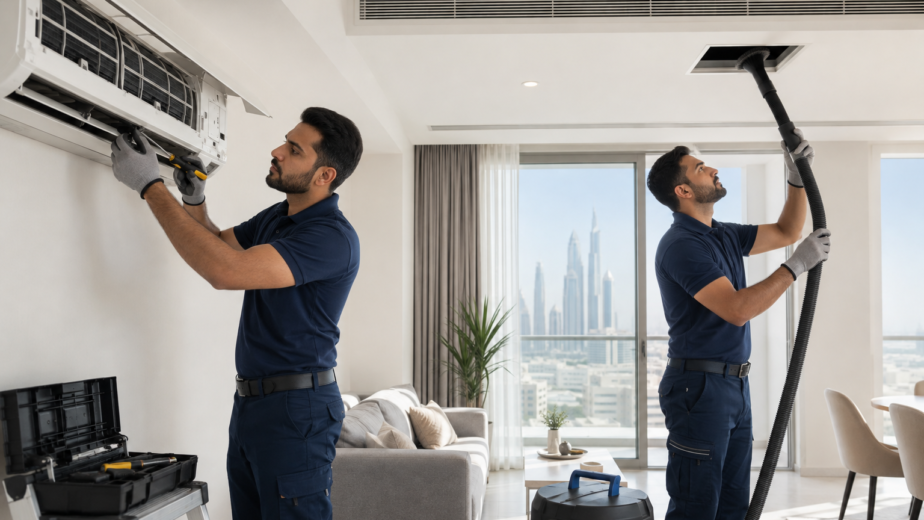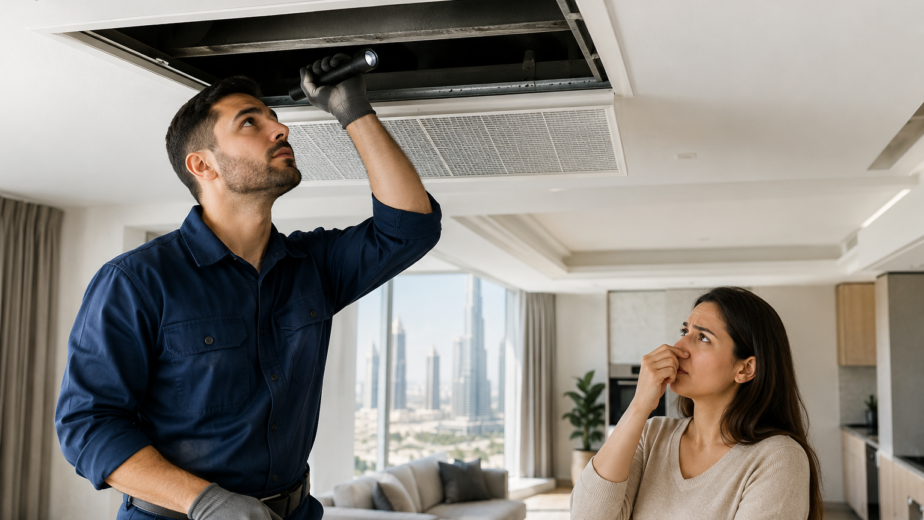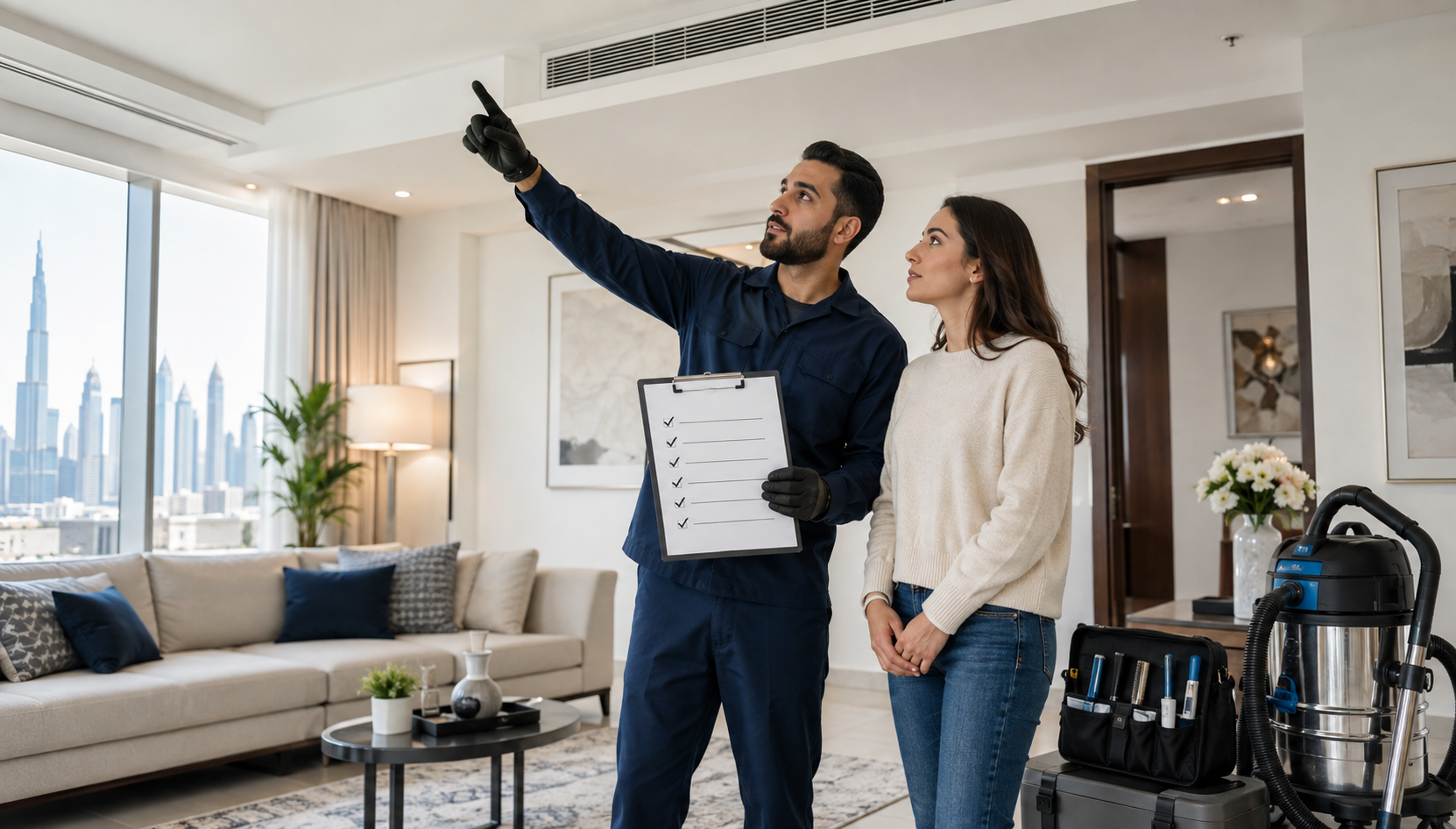
An AC duct cleaning checklist helps Dubai property owners understand what to inspect, what to ask a contractor and how to prepare their apartment or villa before cleaning begins. It also makes it easier to confirm which AC components are included in the quotation and whether a different service may be required.
Professional duct cleaning is not identical to routine AC servicing. It primarily focuses on accessible sections of the air-distribution system, while servicing addresses filters, coils, drainage and mechanical components. The correct scope should therefore be based on inspection findings rather than a generic package.
Use this practical checklist before, during and after an AC duct-cleaning appointment.
When Should You Use an AC Duct Cleaning Checklist?
A checklist is useful whenever you are comparing quotations, preparing a property for cleaning or checking completed work. It can also help when the reason for recurring dust, odours or airflow concerns is unclear.
Consider requesting a professional inspection when:
- Visible debris is present inside accessible duct openings
- Dust or loose particles are released when the AC starts
- Several vents develop repeated heavy accumulation
- A persistent odour appears when air flows through the vents
- Renovation dust may have entered unprotected AC openings
- The property has remained vacant for an extended period
- Filters were previously missing, damaged or poorly fitted
- An inspection identifies substantial accumulation inside accessible components
These signs do not automatically mean the complete duct system requires cleaning. Filters, coils, drainage, air leakage or outdoor dust may be responsible for some symptoms.
Step 1: Record the Problem Before Contacting a Contractor
Write down what you have observed before requesting quotations. Clear information helps the contractor determine what needs to be inspected.
Record:
- Which rooms are affected
- Whether the issue comes from one vent or several
- When the problem began
- Whether dust appears when the AC starts
- Whether there is a stale or musty odour
- Any visible debris inside accessible vents
- Recent renovation or construction activity
- Water leakage or condensation around AC openings
- Reduced airflow or weak cooling
- Previous AC and duct-cleaning dates, if known
Take photographs of visible dust, staining or debris. This provides a useful reference and helps you compare the condition before and after the service.
Step 2: Determine Whether You Need Servicing or Duct Cleaning
AC servicing and duct cleaning address different parts of the system.
Routine servicing may include filters, cooling coils, drain trays, condensate lines, electrical checks and mechanical performance. Duct cleaning may include accessible ducts, supply vents, return grilles, diffusers and related air-distribution components.
If the main problem is weak cooling, water leakage or a noisy AC unit, servicing or repair may be required. If inspection identifies substantial debris inside accessible ducts, a duct-cleaning service may be appropriate.
Read our guide to AC duct cleaning vs AC servicing before approving the scope.
Step 3: Request an Inspection
Avoid accepting a complete cleaning package based only on a telephone description. The contractor should inspect the property or obtain enough accurate information to define the work properly.
During the inspection, ask the technician to check:
- The number and location of AC units
- Supply vents and return-air grilles
- Accessible diffuser boxes
- Visible duct openings
- Filter condition and fitting
- Accessible cooling components
- Drainage and signs of moisture
- Ceiling access points
- Recent renovation contamination
- Areas where dust or odours are most noticeable
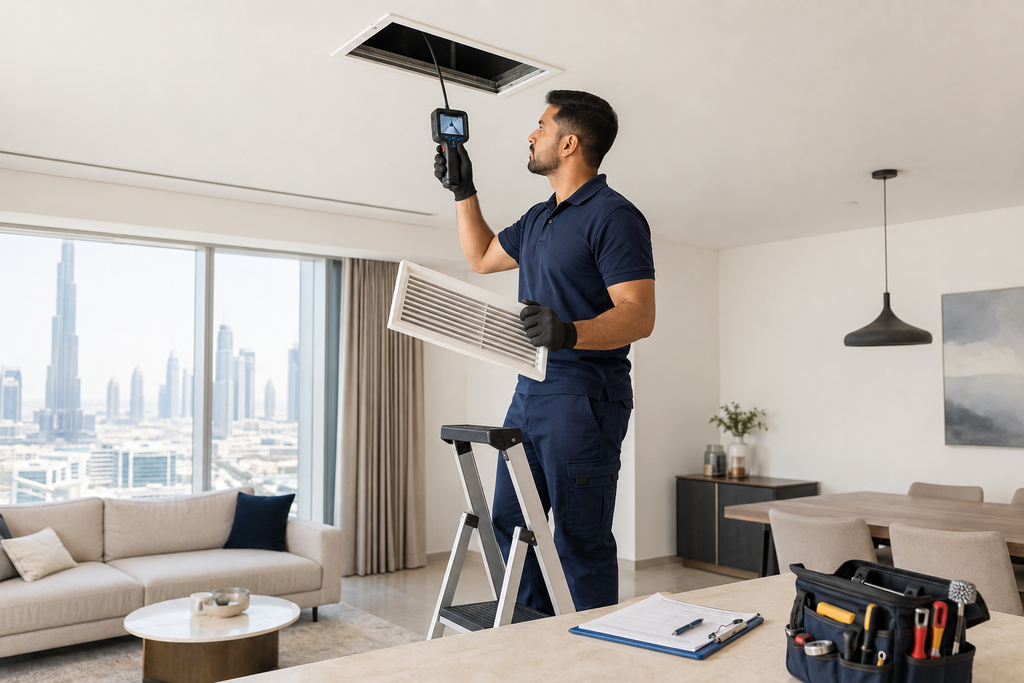
Request photographs where inspection cameras or accessible openings allow them to be taken safely.
Step 4: Confirm What the Quotation Includes
Duct-cleaning quotations can vary significantly. A low advertised price may cover only visible vents, while a more complete service may include accessible duct sections and return-air components.
Your quotation should state:
- Number of AC units covered
- Number of supply vents
- Number of return grilles
- Accessible duct sections included
- Diffuser boxes included
- Filter cleaning or replacement
- Coil cleaning, if applicable
- Drain tray and condensate-line work
- Equipment and cleaning method
- Furniture and floor protection
- Estimated duration
- Access limitations
- Cleanup and waste removal
- Additional charges and exclusions
Ask for clarification if the quotation simply states “full AC cleaning” without defining the components.
Step 5: Ask Which Equipment Will Be Used
Professional duct cleaning normally requires equipment suitable for loosening and extracting debris without unnecessarily releasing it into occupied rooms.
Depending on the system, the contractor may use:
- Professional vacuum equipment
- Flexible vacuum hoses
- Suitable brushes or agitation tools
- Air-cleaning tools
- Protective coverings
- Access equipment
- Inspection cameras
- Hand tools for removing grilles and diffusers
The method should match the duct design and accessibility. The contractor should explain how loosened debris will be captured and how nearby surfaces will be protected.
Step 6: Ask About Sanitisation Separately
Sanitisation should not be assumed to be part of every duct-cleaning service. Ask whether any chemical product is proposed and why it is considered necessary.
Before approving it, request:
- Product name
- Intended purpose
- Areas where it will be applied
- Application method
- Required drying or ventilation time
- Manufacturer’s instructions
- Safety information
- Whether the product is suitable for the duct material
Cleaning and chemical treatment are separate activities. Avoid providers that make broad health claims or recommend chemicals without first inspecting the system.
For independent consumer guidance, the U.S. Environmental Protection Agency explains factors to consider when deciding whether home air ducts should be cleaned.
Step 7: Prepare Your Apartment or Villa
Before the team arrives, ask which rooms require access and how much working space is needed around vents and AC units.
Complete this preparation checklist:
- Move fragile objects away from work areas
- Clear furniture from beneath accessible vents
- Protect valuable electronics
- Secure pets in a separate room
- Inform the contractor about sensitive surfaces
- Provide access to all relevant rooms
- Identify building access and parking requirements
- Arrange access permits if required
- Notify building management when necessary
- Confirm water and electricity requirements
- Photograph important areas before work begins
- Remove personal items from exposed surfaces
Do not block essential access panels or place heavy furniture where technicians need to work.
Apartment AC Duct Cleaning Checklist
Apartment systems can differ considerably between buildings. Some use individual split or ducted units, while others connect to central chilled-water systems.
Before apartment work begins, confirm:
- Building management approval requirements
- Permitted working hours
- Service-elevator access
- Parking and loading arrangements
- Noise restrictions
- Ceiling-access limitations
- Whether the AC system is privately or centrally maintained
- Responsibility for common building components
- Waste-disposal rules
- Protection requirements for corridors and lifts
The contractor should avoid working on shared or landlord-controlled components without appropriate authorization.
Villa AC Duct Cleaning Checklist
Villas often contain more AC units, vents and ceiling-access areas than apartments. The cleaning scope should therefore be divided clearly by floor, room or unit.
For a villa, confirm:
- Total number of indoor AC units
- Total supply and return openings
- Separate systems for different floors
- High-level or double-height vents
- Roof or external-unit access
- Attic or ceiling-space access
- Access ladders or platforms required
- Furniture and staircase protection
- Outdoor dust-entry points
- Areas affected by recent renovation
- Expected number of technicians
- Estimated completion time
Large villas may require work to be completed in stages to reduce disruption.
Step 8: Protect the Property Before Cleaning
Before equipment is brought inside, the cleaning team should protect the surrounding property.
Check that:
- Floors beneath work areas are covered
- Furniture is moved or protected
- Vacuum hoses will not damage corners or doors
- Tools are placed on suitable coverings
- Removed grilles are handled carefully
- Dust will be contained during component removal
- Ceiling finishes are protected
- Access ladders are stable and appropriately positioned
- Nearby electronics and decorative items are covered
- Waste will be collected rather than left in the property
Photograph existing wall, ceiling or grille damage before work starts to avoid confusion later.
Step 9: Confirm the Cleaning Process
Ask the supervisor to explain the sequence before work begins.
A typical process may include:
- Inspecting the system and confirming the scope
- Protecting work areas
- Switching off the relevant AC equipment
- Removing accessible grilles and diffusers
- Loosening debris from included components
- Extracting loose material with suitable vacuum equipment
- Cleaning accessible vent openings and boxes
- Cleaning or replacing included filters
- Reinstalling removed components
- Testing airflow and operation
- Cleaning the work areas
- Completing a final inspection
The sequence will vary according to the system, but the contractor should be able to explain what is being done.
Step 10: Monitor the Work Without Entering Unsafe Areas
You do not need to supervise every movement, but a responsible representative should remain available to answer access questions and confirm the agreed scope.
During the work:
- Confirm technicians are working in the agreed rooms
- Check that furniture and floors remain protected
- Ask before additional paid work is started
- Request photographs of accessible areas where practical
- Keep children and pets away from equipment
- Do not climb ladders or enter ceiling spaces
- Report accidental damage immediately
- Keep a copy of the quotation available
- Note any areas that cannot be accessed
Do not request technicians to create unnecessary openings in ceilings or ducts without understanding how they will be repaired and sealed.
Step 11: Review Before-and-After Evidence
Before-and-after photographs can help confirm work completed in accessible areas. They should show the same component or opening from a similar angle whenever possible.
Review:
- Supply vents
- Return grilles
- Accessible diffuser boxes
- Included duct openings
- Filters
- Other components listed in the quotation
Photographs do not replace a physical inspection, but they provide a useful service record.
Step 12: Complete the Final Inspection
Before the team leaves, check:
- Grilles and diffusers are reinstalled correctly
- No screws or fittings are missing
- Ceiling edges have not been damaged
- AC units switch on normally
- Airflow is present at the vents
- Floors and furniture are clean
- Equipment and waste have been removed
- Access panels are closed
- Any limitations are documented
- Additional repairs are explained
- The invoice matches the approved quotation
Report concerns before signing the completion document.
Step 13: Ask for Maintenance Recommendations
After cleaning, ask what maintenance is recommended and why. Advice should be specific to the property rather than a generic fixed schedule.
Recommendations may include:
- Filter inspection or replacement
- Coil servicing
- Drain-line maintenance
- Repairing damaged insulation
- Sealing gaps around diffusers
- Correcting condensation
- Protecting vents during renovation
- Improving window or door seals
- Monitoring recurring dust
- Scheduling another inspection only when justified
If dust quickly returns, use our guide explaining why dust keeps returning after cleaning to investigate other possible sources.
Step 14: Monitor the Property After Cleaning
Observe the AC system over the following days.
Check for:
- Normal cooling and airflow
- Unusual noise
- Water leakage
- Recurring odour
- Dust released from vents
- Loose or vibrating grilles
- Ceiling marks
- Problems limited to one room
- Filters becoming dirty unusually quickly
Contact the contractor promptly if a problem appears to relate to the completed work.
A persistent odour may have a moisture, drainage or leakage source. Review the common causes of a musty smell from AC vents before assuming another duct cleaning is required.
Warning Signs When Choosing a Contractor
Be cautious when a provider:
- Guarantees health improvements
- Recommends cleaning without asking about the system
- Uses one price for every property
- Cannot explain what is included
- Refuses to provide a written quotation
- Pressures you to approve chemicals immediately
- Claims every odour comes from dirty ducts
- Cannot describe the cleaning equipment
- Will not document inaccessible areas
- Requests full payment before confirming the scope
- Suggests unnecessary ceiling damage
- Cannot provide basic company information
Choose a contractor based on a clear scope, suitable equipment, property protection and transparent communication.
Frequently Asked Questions
What should an AC duct-cleaning quotation include?
It should identify the AC units, vents, return grilles and accessible duct components covered, together with the cleaning method, exclusions, duration and price.
Is cleaning the visible AC vents enough?
Cleaning visible vents removes surface dust but does not clean debris deeper inside accessible duct components. An inspection can determine whether additional work is justified.
Should filters be replaced during duct cleaning?
It depends on the filter type and condition. Reusable filters may be cleaned when suitable, while damaged or disposable filters may require replacement. Confirm whether this is included.
How long does AC duct cleaning take?
The duration depends on the property size, number of units and vents, accessibility, contamination level and cleaning scope. Ask for an estimate after inspection.
Do I need to leave the property during cleaning?
This depends on the method, property layout and any products used. Ask the contractor before the appointment and keep children and pets away from active work areas.
How often should AC ducts be cleaned in Dubai?
There is no universal schedule for every property. Inspection findings, visible debris, renovation history, odours and system condition should guide the decision.
Should apartments get building-management approval?
Some buildings require access permits, contractor documents, service-elevator bookings or approval for AC-related work. Confirm with management before the appointment.
What should I check after cleaning?
Check that vents are reinstalled, the AC operates normally, airflow is present, work areas are clean and all agreed components have been completed.
Book Professional AC Duct Cleaning in Dubai
A clear AC duct cleaning checklist helps prevent misunderstandings and ensures that the quotation, preparation, cleaning process and final inspection are properly documented.
Ready to move from checklist to inspection? View Wavex’s AC duct cleaning service in Dubai for apartments, villas, offices and commercial properties. Our team inspects the system, defines the accessible cleaning scope and provides a clear quotation before work begins.
Contact Wavex Technical Services to arrange an inspection for your Dubai property.