

A musty smell from AC vents usually indicates that moisture, accumulated debris or another odour source is present somewhere in or around the air-conditioning system. The smell may come from a dirty filter, wet drain tray, blocked condensate line, cooling coil, nearby ceiling space or accessible section of the ductwork.
Dubai’s humidity and frequent AC use can create conditions where moisture remains around cooling components. However, a musty odour does not automatically prove that mould is growing inside the ducts. The source should be inspected before cleaning, sanitisation or repairs are recommended.
This guide explains common causes of musty AC smells, what property owners can safely check and when professional inspection may be necessary.
What Causes a Musty Smell From AC Vents?
Air passing through an AC system can carry odours from different components into occupied rooms. Because the smell exits through the vents, people often assume the ducts are the source. In reality, the problem may begin at the filter, cooling coil, condensate drainage system, indoor unit or surrounding ceiling area.
The timing of the smell provides useful clues. An odour that appears only when the AC starts may have a different source from one that remains present when the system is switched off. A smell limited to one room may point to a local vent, duct or ceiling issue, while an odour coming from several vents may require inspection of shared AC components.
1. Dirty or Damp AC Filters
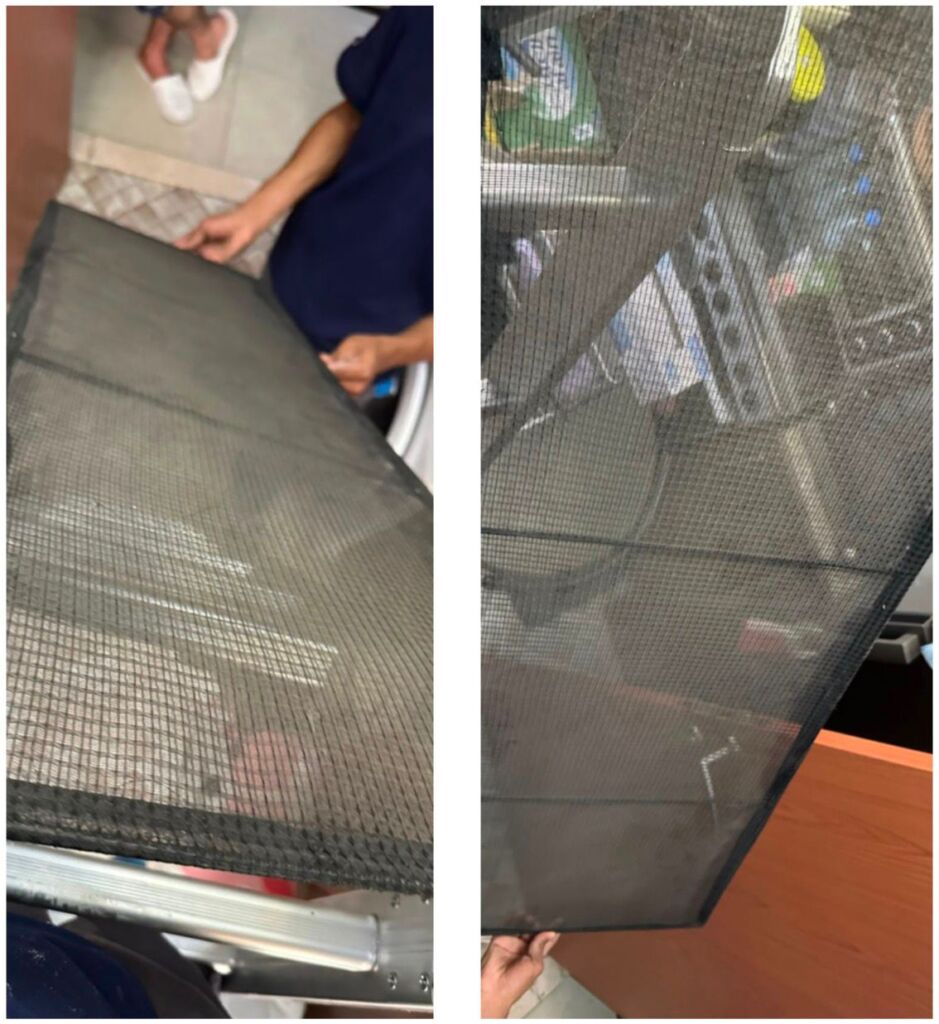
AC filters capture dust and airborne particles before air moves through the system. When a filter becomes heavily loaded or remains damp, it may produce an unpleasant stale smell.
A dirty filter can also restrict airflow and place unnecessary strain on the cooling system. If it is damaged, incorrectly fitted or unsuitable for the unit, air may bypass the filter and carry particles further into the system.
Check whether the filter is visibly dirty, damp, damaged or poorly positioned. Clean or replace it according to its type and the manufacturer’s instructions. If a new or cleaned filter does not resolve the smell, further inspection may be required.
2. Moisture on the Cooling Coil
The evaporator or cooling coil becomes cold while the AC is operating. Moisture in the air can condense on the coil and should drain away through the condensate system.
Dust and residue may collect on accessible coil surfaces over time. When combined with moisture, this accumulation can contribute to stale or musty odours.
Coil cleaning is normally part of AC servicing rather than standard duct cleaning. A technician should inspect the coil condition, drainage and airflow before recommending the appropriate service.
3. Water Accumulating in the Drain Tray
The drain tray collects condensation from the indoor AC unit and directs it towards the drain line. If water remains in the tray because of a blockage, poor alignment or drainage problem, an odour may develop.
Possible warning signs include:
- Water dripping from the indoor unit
- Dampness or staining around the ceiling
- A musty smell when the AC starts
- Water visible inside an accessible drain tray
- Repeated drain-line blockages
Standing water should not be ignored because continued leakage may damage ceilings, walls or nearby finishes. The cause should be identified and corrected rather than covering the smell with fragrance.
4. Blocked or Dirty Condensate Drain Line
The condensate drain line carries water away from the indoor AC unit. Dust, residue or other material may restrict this line, causing water to drain slowly or back up into the tray.
A drainage problem can produce unpleasant odours and may eventually lead to leakage. Gurgling sounds, recurring water stains or moisture around the indoor unit may indicate that the drain requires inspection.
Flushing or repairing a condensate line should be completed using a method suitable for the system. Avoid pushing unsuitable objects or harsh chemicals into the line, as this may damage components or move the blockage further into the drainage system.
5. Dust and Debris Inside Accessible Ductwork
Loose dust and debris may collect inside accessible duct sections, diffuser boxes, vents and return-air grilles. If moisture reaches these materials, the air passing over them may carry a stale odour into the room.
A professional inspection may be appropriate when the smell comes from multiple vents, visible debris is present inside duct openings or the property recently underwent dusty renovation work.
Duct cleaning should have a clearly defined scope. The contractor should explain which sections are accessible, what equipment will be used and whether the AC unit itself requires separate servicing.
6. Dirty Supply Vents and Return Grilles
Dust commonly accumulates on supply vents and return-air grilles because air passes through them whenever the system operates. In humid conditions, this surface dust may become damp and contribute to an unpleasant smell.
Visible covers can usually be cleaned without treating the entire duct system. However, dark staining or repeated moisture around a grille should be inspected to determine whether condensation, air leakage or another issue is present.
Cleaning only the visible surface may provide temporary improvement if the underlying moisture source remains unresolved.
7. High Indoor Humidity
High humidity can make rooms feel damp and intensify existing odours. It may also cause condensation on cold AC surfaces, around diffusers or near poorly insulated duct connections.
Possible contributors include:
- Frequently opening balcony doors or windows
- Poorly sealed external openings
- An AC system that is oversized or not operating correctly
- Insufficient ventilation in bathrooms or kitchens
- Water leakage within the property
- Condensation around cold surfaces
Humidity should be assessed together with the AC system and the building condition. Duct cleaning alone will not correct water leakage, ventilation problems or gaps around the property.
8. Condensation Around Ducts or Diffusers
Cold air travelling through ducts can cause condensation when warm, humid air reaches an inadequately insulated surface. Moisture may appear around a ceiling diffuser, access panel or duct connection.
Look for water droplets, discolouration, peeling paint or damp marks around the vent. These signs may indicate damaged insulation, air leakage or a temperature difference that requires technical inspection.
The wet area should be dried and the source corrected. Repainting the ceiling without addressing the condensation problem may allow staining and odours to return.
9. Moisture From a Ceiling or Plumbing Leak
A musty smell near an AC vent may originate from outside the AC system. Plumbing leaks, roof problems, bathroom leakage or condensation from another pipe can create dampness inside the ceiling void.
Because vents provide an opening between the ceiling and the room, odours from the concealed space may become more noticeable when air moves through the grille.
Check for ceiling stains, bubbling paint, soft gypsum board or damp patches. If a leak is suspected, arrange the appropriate plumbing, waterproofing or building inspection before cleaning the ducts.
10. Renovation Dust and Materials
Renovation work introduces dust, adhesives, paints, sealants and other materials that may create temporary odours. If AC openings were not protected, fine construction dust may enter accessible parts of the system.
The property may require post-construction cleaning, filter replacement, AC servicing or duct inspection depending on what entered the system. Chemical or paint odours should not be automatically treated as a duct-contamination problem.
Contractors should protect vents during dusty work and coordinate AC use to reduce the movement of debris through the property.
11. Odours Entering Through the Return-Air Path
Return-air grilles draw air from the room back towards the AC unit. Smells from damp carpets, cleaning materials, stored items, kitchens, bathrooms or nearby ceiling spaces may be drawn into the system and redistributed.
Observe whether the smell is strongest close to the return grille or whether it begins after a particular activity. Removing the external odour source may solve the problem without duct cleaning.
Keep strong-smelling chemicals and damp materials away from return-air openings.
How to Identify Where the Smell Is Coming From
Before booking a particular cleaning service, note when and where the smell appears.
Use this inspection checklist:
- Determine whether the smell starts when the AC switches on
- Check whether it comes from one vent or several vents
- Inspect accessible filters for dirt or dampness
- Look for water in or around the indoor AC unit
- Check ceilings for stains, peeling paint or soft areas
- Examine visible vents and return grilles
- Note any recent renovation, painting or water leakage
- Check whether the smell remains when the AC is off
- Identify any unusual sounds or reduced airflow
Do not dismantle concealed AC components without suitable experience. A technician can inspect the indoor unit, drainage system and accessible air-distribution components safely.
AC Servicing or Duct Cleaning: Which One Is Needed?
The correct service depends on the location of the problem.
AC servicing may be required when the source is a dirty filter, cooling coil, drain tray, blocked condensate line or mechanical fault. Duct cleaning may be appropriate when inspection identifies substantial dust, debris or odour-producing material inside accessible air-distribution components.
Some properties may require both services. Cleaning the ducts will not clear a blocked drain, and servicing the indoor unit will not remove significant debris already present inside accessible ductwork.
Read our detailed guide to AC duct cleaning vs AC servicing before choosing a service.
When Should AC Ducts Be Inspected?
Consider requesting an inspection when:
- A musty smell comes from several vents
- Visible debris is present inside accessible duct openings
- Dust or particles are released when the AC starts
- The smell returns after filters and accessible surfaces are cleaned
- Construction dust may have entered the system
- Moisture or staining appears around diffusers
- The property has remained vacant for an extended period
- The source cannot be identified through basic checks
Inspection does not always lead to complete duct cleaning. The technician may identify a filter, drainage, condensation or sealing problem that requires a different solution.
Why Covering the Smell Is Not a Solution
Air fresheners, perfumes and deodorising sprays may temporarily mask an odour but will not remove its source. Spraying products directly into vents can introduce additional chemicals into the air-distribution system and may affect surfaces or components.
Sanitisation should not be treated as an automatic add-on. Before any chemical product is used, ask what substance will be applied, why it is needed, where it will be used and whether it is suitable for the system.
The priority should be to identify and correct moisture, drainage, debris or leakage problems.
When the Smell Requires Immediate Attention
Not every AC odour is musty. Switch off the affected system and arrange professional assessment if you notice:
- A burning or overheating smell
- A strong electrical or melting-plastic odour
- Smoke from the unit or vent
- Significant water leakage near electrical components
- A strong chemical smell with no known source
- Unusual mechanical noise together with an odour
These signs may indicate an electrical, mechanical or safety problem rather than a cleaning issue.
How to Help Prevent Musty AC Odours
Moisture control is especially important when investigating persistent odours. The U.S. Environmental Protection Agency’s homeowner guidance explains how controlling humidity, repairing water problems and drying damp areas can help prevent moisture-related problems. The following measures may reduce the likelihood of recurring smells:
- Inspect and maintain filters regularly
- Arrange AC servicing according to system condition
- Keep condensate drainage clear and functional
- Investigate water leakage promptly
- Protect vents during renovation work
- Maintain suitable indoor humidity
- Clean visible grilles and diffusers
- Repair condensation or damaged insulation
- Keep damp materials away from return grilles
- Request inspection when an unexplained smell persists
Preventive maintenance is generally more effective than repeatedly masking an odour.
Frequently Asked Questions
Why does my AC smell musty when it first turns on?
Moisture or residue may be present on the filter, cooling coil, drain tray, vent or another accessible component. The system should be inspected if the smell persists after basic filter and surface cleaning.
Does a musty smell mean there is mould in the ducts?
Not necessarily. A musty odour may come from a damp filter, blocked drain, wet coil, ceiling leak or another moisture source. Confirming microbial growth requires appropriate inspection rather than relying on smell alone.
Can AC duct cleaning remove a musty smell?
It may help when the identified source is debris or contaminated material inside the duct areas included in the service. It will not solve blocked drainage, water leakage, dirty coils or condensation problems outside the cleaning scope.
Can a dirty AC filter cause a bad smell?
Yes, a heavily soiled or damp filter may contribute to stale odours. Inspect the filter and clean or replace it according to its type and the manufacturer’s instructions.
Why does only one AC vent smell?
A smell from one vent may indicate local dust, moisture, a duct connection issue or an odour entering from the surrounding ceiling space. That area should be inspected first.
Should I spray air freshener into AC vents?
No. Fragrance may only mask the odour and can introduce chemicals into the system. Identify and correct the source instead.
How can I get an AC duct inspection in Dubai?
Contact a professional contractor, explain when and where the smell occurs, and request an inspection covering the filter, indoor unit, drainage and accessible duct components.
Request an AC Inspection in Dubai
A musty smell from AC vents can originate from several parts of the air-conditioning system or the surrounding property. Identifying the source is essential because cleaning the wrong component may provide only temporary improvement.
When inspection confirms dust or debris in the air-distribution system, Wavex provides professional AC duct cleaning in Dubai for apartments, villas, offices and commercial properties. Our team can inspect accessible vents and duct components, explain the recommended scope and provide a clear quotation before work begins.
Contact Wavex Technical Services to request an AC duct inspection for your Dubai property.