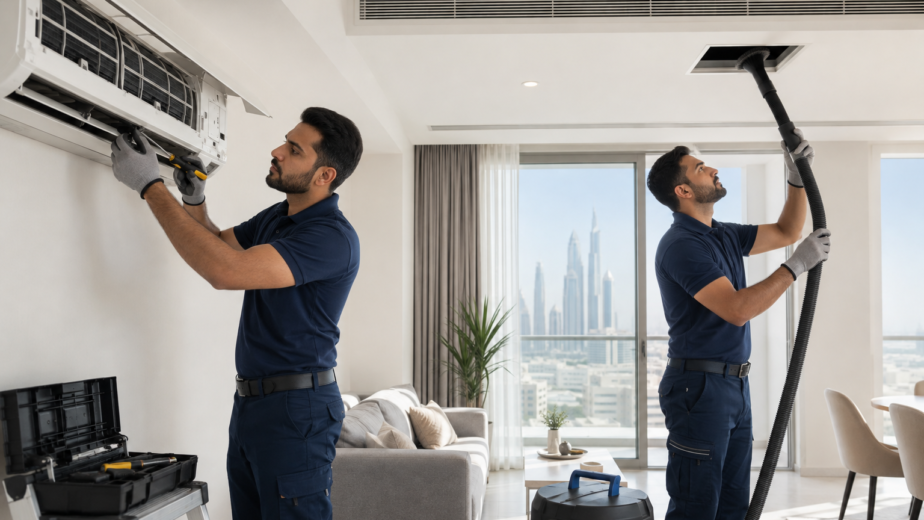
Dust keeps returning after cleaning for several possible reasons. In Dubai homes, outdoor sand and construction particles can enter through doors, windows, ventilation openings and gaps around the property. Dust may also recirculate through an air-conditioning system when filters, vents or accessible duct sections require attention.
Repeated dust does not automatically mean that the AC ducts are dirty. The source could be an unsuitable filter, gaps around windows, recent renovation work, fabric fibres, pet dander or normal indoor activity. Identifying where the dust comes from is the first step towards reducing how quickly it settles again.
This guide explains the common reasons dust returns in Dubai apartments and villas, how the AC system may contribute, and when a professional inspection may be appropriate.
Why Dust Returns So Quickly in Dubai Homes
Dubai’s dry climate and frequent construction activity create conditions where fine particles can easily enter residential properties. Even a well-maintained home will collect some dust over time, particularly when doors are opened frequently or the property is located close to a busy road or active construction site.
Air conditioning operates for much of the year, continuously moving air between rooms. If particles enter the system or collect around filters, return grilles and vents, they may become part of the property’s recurring dust problem. However, the cause should be investigated rather than assumed.
The speed at which dust returns depends on the property’s location, occupancy, ventilation, cleaning practices, AC condition and recent renovation history.
1. Outdoor Dust Entering the Property
Outdoor air can carry sand, road dust and fine construction particles. These particles may enter through open doors, balcony access, windows and small gaps in the building envelope.
Homes located near construction sites, major roads or undeveloped plots may experience faster dust accumulation. Upper-floor apartments are not completely protected because airborne particles can travel and enter through openings or ventilation pathways.
Check the seals around windows and balcony doors. Visible gaps, damaged rubber seals or doors that do not close properly can allow more outdoor dust to enter.
2. Dirty or Unsuitable AC Filters
AC filters help capture airborne particles before air passes through the system. When a filter becomes heavily loaded, damaged or incorrectly fitted, it may not perform as intended.
A filter that is too small for its frame can leave gaps around the edges. Air may bypass the filter through these spaces, carrying dust further into the AC system. An unsuitable filter may also restrict airflow or fail to capture the particle sizes commonly present in the property.
Filters should be inspected and cleaned or replaced according to their condition and the AC manufacturer’s recommendations. Properties with pets, frequent door opening, nearby construction or heavy occupancy may require more frequent inspection.
3. Dust Around Return Grilles and Supply Vents
Return grilles draw indoor air back into the AC system, while supply vents distribute cooled air into rooms. Dust commonly collects on both because of continuous airflow.
A layer of dirt around the grille does not necessarily prove that the entire duct system requires cleaning. It may be surface accumulation caused by ordinary indoor dust, an overdue filter or air passing through gaps around the grille.
Clean the visible grille surfaces and inspect the accessible area behind them. If substantial debris is visible further inside, a professional inspection can help determine the appropriate cleaning scope.
4. Dust and Debris Inside Accessible Ductwork
Over time, loose particles may accumulate inside accessible parts of an air-distribution system. This can be more noticeable where filters were missing, damaged or poorly fitted, or where dust entered during construction or renovation.
Possible warning signs include visible debris inside duct openings, particles released when the AC starts, and significant accumulation around multiple vents shortly after they have been cleaned.
Duct cleaning should be based on the system’s actual condition. A technician should inspect accessible areas before recommending the service and clearly explain which sections can be cleaned.
5. Renovation and Construction Dust
Renovation work can generate fine gypsum, cement, drilling, tile-cutting and sanding dust. These particles can spread beyond the immediate work area and settle on walls, furniture, ceilings and inside accessible AC openings.
If vents and return grilles are left open during renovation, dust may enter the air-distribution system. Turning on the AC while dusty work is taking place can carry particles to other areas of the property.
Before renovation begins, contractors should protect accessible vents and coordinate AC usage carefully. After the work, the property may require detailed post-construction cleaning, filter inspection and an assessment of accessible vents and ducts.
6. Gaps Around Windows and Doors
Small gaps around window frames, balcony doors and entrance doors may allow outdoor dust to enter even when they appear closed. Fine particles can pass through spaces that are difficult to notice during a casual inspection.
Look for dust lines around window edges, door thresholds and frames. These patterns can indicate where outside air is entering. Replacing damaged seals or adjusting poorly aligned doors may reduce the amount of dust entering the home.
Sealing problems should be addressed separately from AC maintenance. Duct cleaning will not prevent new outdoor particles from entering through gaps in the property.
7. Air Leakage Around AC Openings
Air can sometimes escape or enter around poorly sealed vent frames, access panels and connections. Dust marks around the edges of a diffuser may indicate an airflow or sealing issue rather than contamination throughout the duct.
A qualified technician can inspect accessible connections and identify obvious gaps. Any repair should use materials suitable for the AC system and the surrounding ceiling construction.
Cleaning without correcting an air-leakage problem may provide only a temporary improvement because particles can continue to enter or collect around the same opening.
8. Fabrics, Carpets and Upholstered Furniture
Not all indoor dust comes from outside. Bedding, curtains, carpets, clothing and upholstered furniture release small fibres during normal use. These fibres mix with hair, skin particles and other household debris.
Rooms with extensive fabrics or carpeting may accumulate visible dust more quickly than minimalist spaces with hard flooring. Regular vacuuming with suitable equipment, washing bedding and cleaning upholstery can help control these indoor sources.
Dust found near an AC vent may therefore come from the room itself rather than exclusively from inside the duct.
9. Pets and Daily Household Activity
Pet hair and dander contribute to indoor particles, particularly in homes where animals spend time on furniture or close to return-air grilles. Cooking, opening doors, moving fabrics and ordinary foot traffic can also lift settled particles back into the air.
More frequent cleaning and filter inspection may be appropriate in occupied homes with pets. Keep the area around return grilles clear and avoid positioning objects that restrict airflow.
The aim is not to eliminate every particle, which is unrealistic, but to identify and control the largest recurring sources.
10. Incomplete Cleaning Methods
Dry dusting can move particles from one surface to another instead of capturing them. Feather dusters and dry cloths may lift fine dust into the air, allowing it to settle again later.
Use a slightly damp microfibre cloth for suitable hard surfaces and a vacuum equipped with an appropriate filter for floors, rugs and upholstery. Clean from higher areas downwards so dislodged particles can be removed from the floor at the end.
Remember to clean overlooked areas such as the tops of cabinets, ceiling-fan blades, curtain rails, skirting boards and accessible vent covers.
How to Identify the Source of Recurring Dust
When dust keeps returning after cleaning, observing where it first appears can help identify whether it is entering through windows, collecting around AC components or coming from indoor materials. Start by observing where the dust appears first and how quickly it returns. Dust concentrated near windows may point to gaps or outdoor entry. Accumulation around return grilles may indicate filter or airflow issues. Fine renovation residue across multiple rooms may require post-construction cleaning and an AC inspection.
Use this basic checklist:
- Inspect AC filters for dirt, damage and incorrect fitting
- Check visible vent and grille surfaces
- Look for debris inside accessible duct openings
- Examine window and door seals
- Identify nearby construction or renovation activity
- Check whether the dust is concentrated in particular rooms
- Review how the property is being cleaned
- Note any particles released when the AC starts
Photographs of recurring dust patterns may help a technician understand the problem during an inspection.
When Should You Consider AC Duct Cleaning?
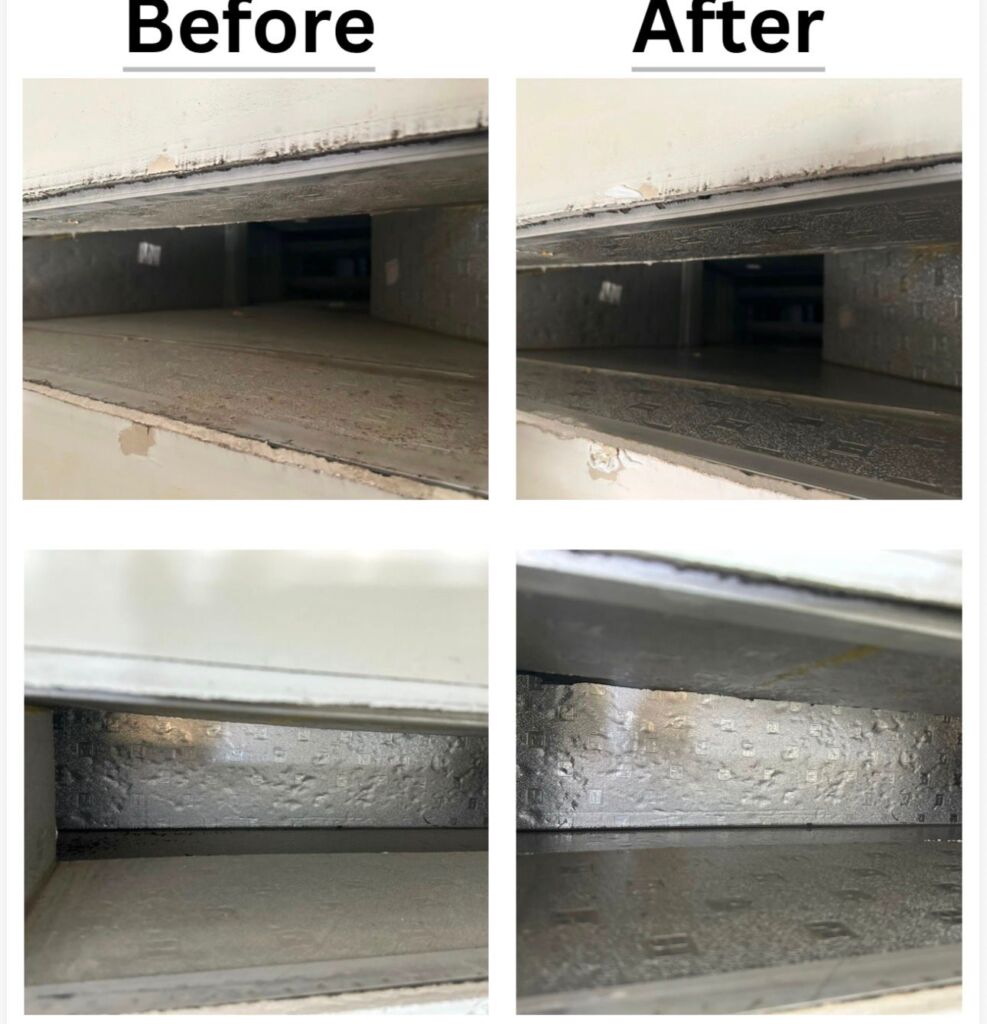
For independent consumer information, review the U.S. Environmental Protection Agency’s guidance on deciding when air-duct cleaning may be appropriate. AC duct cleaning may be considered when an inspection identifies substantial dust or loose debris inside accessible sections of the air-distribution system. It may also be appropriate after major renovation work if vents were left unprotected and construction particles entered the system.
Other reasons to request an inspection include visible debris being released from vents, persistent musty odours, contamination identified inside accessible duct sections or repeated accumulation around multiple grilles.
Cleaning should not be presented as a guaranteed solution for every dusty home. The source may be outside the duct system, and other repairs or housekeeping measures may be required.
For a clearer explanation of the different scopes, read our comparison of AC duct cleaning and AC servicing.
What Professional AC Duct Cleaning May Include
The scope varies according to the property, system design and accessibility. A professional service may include:
- Inspecting accessible ducts, vents and return grilles
- Protecting floors, furniture and surrounding surfaces
- Removing and cleaning accessible grilles and diffusers
- Loosening accumulated debris using suitable cleaning tools
- Extracting loose particles with professional vacuum equipment
- Cleaning accessible vent openings and diffuser boxes
- Reinstalling cleaned components
- Conducting a final visual inspection
Request a written quotation that states which areas are included. AC unit servicing, filter replacement, sanitisation and mechanical repairs may be separate services.
If inspection shows that duct cleaning is appropriate, explore Wavex’s AC duct cleaning services in Dubai for apartments, villas, offices and commercial properties.
How to Reduce Dust Accumulation After Cleaning
If dust keeps returning after cleaning, controlling several sources together is generally more effective than relying on a single cleaning method. No method can keep a home completely dust-free, but the following steps may reduce how quickly particles return:
- Inspect and maintain AC filters
- Keep windows and balcony doors properly closed
- Repair damaged door and window seals
- Clean accessible vent covers and return grilles
- Use suitable vacuuming and damp-dusting methods
- Protect vents during renovation work
- Complete detailed post-construction cleaning
- Keep areas around return grilles unobstructed
- Inspect visible AC openings when unusual accumulation appears
- Arrange professional assessment when the cause remains unclear
Addressing several sources together is usually more effective than relying on one cleaning service alone.
Frequently Asked Questions
Why does my Dubai apartment get dusty so quickly?
Outdoor sand, nearby construction, gaps around windows and doors, indoor fabrics, daily activity and AC-related issues may all contribute. The dust pattern and property condition should be inspected to identify the most likely sources.
Does recurring dust mean my AC ducts are dirty?
Not necessarily. Dust may come from outside, filters, fabrics, pets or cleaning methods. Visible debris inside accessible ducts or particles released from several vents may justify a professional inspection.
Can a dirty AC filter make a home dustier?
A dirty, damaged or incorrectly fitted filter may reduce effective particle capture or allow air to bypass the filter. Filters should be inspected and maintained according to their type, condition and manufacturer’s guidance.
How often should AC ducts be cleaned in Dubai?
There is no single schedule suitable for every property. The decision should be based on inspection findings, visible accumulation, renovation history, odours and the condition of the system.
Will duct cleaning permanently stop dust?
No. Duct cleaning removes debris from the areas included in the service, but it cannot prevent new dust from entering through doors, windows, construction activity or normal household use.
Should AC vents be covered during renovation?
Accessible vents and return openings should be protected from construction dust using an appropriate method coordinated with the contractor. The AC system should not be operated in a way that spreads renovation debris through the property.
Request an AC Duct Inspection in Dubai
Recurring dust can have several causes, so the correct solution begins with identifying the source. Inspecting filters, vents, accessible duct sections and property openings can help determine whether cleaning, maintenance, sealing or improved housekeeping is required.
Contact Wavex Technical Services to arrange an AC duct inspection and receive a clearly defined quotation for your apartment, villa, office or commercial property in Dubai.