When dividing rooms, offices or commercial spaces in Dubai, one of the most important decisions is choosing between a gypsum partition and a traditional brick wall. Both systems can create durable interior divisions, but they differ significantly in weight, installation time, flexibility, finishing and suitability for different projects.
For many modern renovations, gypsum partitions are attractive because they can be installed relatively quickly and adapted to changing layouts. Brick walls can be preferable where a heavier, more permanent masonry construction is required. The right choice depends on the building, room function, performance requirements and project budget.
Gypsum Partition vs Brick Wall: Quick Comparison
| Factor | Gypsum Partition | Brick Wall |
|---|---|---|
| Installation speed | Generally faster | Usually slower due to masonry and curing |
| Weight | Lightweight system | Significantly heavier |
| Layout flexibility | Excellent for interior changes | Less flexible after construction |
| Surface finish | Smooth finish with joint treatment | Requires plastering and finishing |
| Services inside wall | Can accommodate electrical and other services within the cavity | More disruptive to modify |
| Acoustic performance | Can be designed with insulation and multiple layers | Good mass-based performance depending on construction |
| Best suited to | Offices, apartments, villas and flexible interiors | Permanent masonry applications |
What Is a Gypsum Partition?
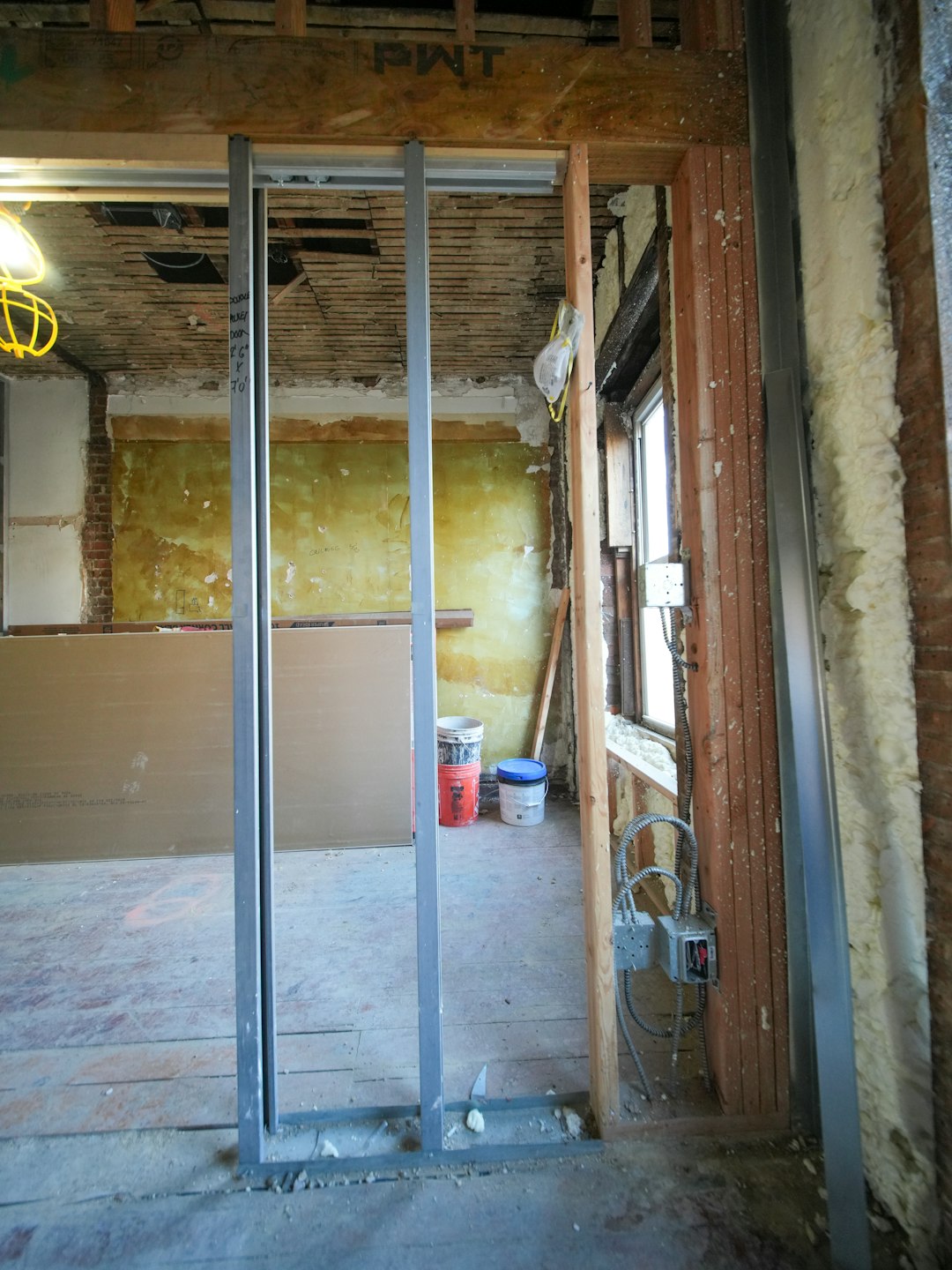
A gypsum partition is a lightweight interior wall system normally constructed using metal framing with gypsum boards fixed to one or both sides. The cavity can accommodate insulation, cables and selected services, while the surface can be jointed and finished ready for decoration.
Gypsum partitions are widely used for room divisions, office layouts, meeting rooms, bedrooms, dressing areas, feature walls and other interior applications.
What Is a Brick Wall?
A brick wall is a masonry construction built from blocks or bricks joined with mortar and generally finished with plaster or another surface treatment. It creates a solid, heavy wall and can be suitable where a permanent masonry partition is required.
Because masonry construction is heavier and involves wet trades, it may require more preparation, labour and time than a lightweight gypsum system.
5 Key Advantages of Gypsum Partitions in Dubai
1. Faster Interior Installation
Gypsum framing and boards can often be installed faster than a conventional masonry wall. This can be particularly useful during apartment, villa and office renovations where downtime needs to be controlled.
2. Lightweight Construction
A gypsum partition generally places less additional load on a building than a comparable masonry wall. Structural suitability should still be confirmed by the relevant project professionals when required.
3. Flexible Room Layouts
Gypsum makes it easier to create or modify internal layouts. This is useful for offices that may need changing work areas, meeting rooms or private cabins.
4. Clean Integration of Services
Electrical cables, insulation and selected services can be coordinated within the wall cavity, reducing the need for extensive chasing compared with masonry construction.
5. Design Flexibility
Gypsum can be used for straight partitions, curved features, niches, concealed lighting details and decorative elements when designed and installed correctly.
When Is a Brick Wall Better?
A brick or block wall may be the better option when the project specifically requires permanent masonry construction, substantial impact resistance or other properties associated with a solid wall. The decision should consider structural requirements, wall height, intended use and applicable building requirements.
Gypsum Partition vs Brick Wall for Offices
For many Dubai offices, gypsum partitions are a practical choice because businesses frequently need to reorganize internal spaces. Meeting rooms, manager cabins, reception backdrops and work areas can be created without committing to a heavy masonry layout.
Acoustic requirements are important in offices. A suitable gypsum system can incorporate insulation and additional board layers to improve sound control, but performance depends on the complete wall assembly and correct installation.
Gypsum Partition vs Brick Wall for Villas and Apartments
In residential renovations, gypsum can be useful when homeowners want to divide bedrooms, create dressing areas, close open spaces or add decorative features without introducing a heavy wet construction process.
For bathrooms, kitchens and other moisture-prone areas, the board specification and detailing should be selected appropriately. Gypsum should not be treated as automatically suitable for every location simply because it is lightweight.
Which Is More Cost-Effective?
There is no universal winner on cost. A gypsum partition can reduce installation time and simplify certain renovation works, while masonry may make sense for a specific permanent application. The final project price depends on wall area, height, board type, framing, insulation, finishing, doors, electrical requirements, site access and demolition.
When comparing quotations, make sure both contractors are pricing the same wall thickness, performance specification, finish and scope. A cheaper quote may simply contain fewer materials or exclude finishing and associated works.
Which Is Faster to Install?
Gypsum partitions are generally faster to install because the system uses dry construction and does not require the same masonry curing process. This can help reduce disruption during occupied-home or office renovations.
Which Has Better Sound Insulation?
Neither material should be judged by the board or brick alone. Acoustic performance depends on the complete wall assembly, including thickness, layers, framing, insulation, junctions and doors. A properly specified gypsum partition with acoustic insulation and multiple layers can provide strong sound-control performance for many interior applications.
How to Choose the Right Wall System
- Identify whether the wall is intended to be permanent or may need future modification.
- Check any structural or building requirements before selecting the system.
- Determine whether acoustic, fire or moisture performance is required.
- Compare the complete installed specification rather than the basic material price.
- Consider electrical, lighting, HVAC and other services that must pass through the wall.
- Confirm the required final finish and painting scope.
- Use an experienced contractor for correct framing, board fixing, joint treatment and detailing.
Why Professional Installation Matters
Even high-quality gypsum boards can develop cracks, uneven joints or movement problems if the framing and finishing are poorly executed. Professional installation includes accurate setting-out, suitable framing, correct board fixing, proper joint treatment and attention to openings and junctions.
For masonry, workmanship is equally important. Poor alignment, inadequate bonding or unsuitable plastering can create finishing problems later.
Frequently Asked Questions
Is gypsum better than brick for interior partitions?
For many flexible interior layouts, gypsum is a practical option because it is lightweight, fast to install and easy to adapt. Brick or block may be preferable when a permanent masonry wall is specifically required.
Is a gypsum partition strong enough for an office?
Yes, when the partition is correctly designed and installed for its intended use. Framing can also be reinforced at locations where doors, cabinets or other fixtures require additional support.
Can gypsum partitions provide privacy?
Yes. Acoustic insulation, suitable board layers and careful detailing can improve sound control and privacy. The complete wall assembly matters more than the board alone.
Can gypsum partitions be painted?
Yes. After correct joint treatment and surface preparation, gypsum partitions can be finished and painted like other interior surfaces.
Should I choose gypsum or brick for my Dubai renovation?
Choose based on the required permanence, performance, building conditions, design flexibility, installation time and total project cost. A site assessment can help determine the most appropriate system.
Need Gypsum Partition Installation in Dubai?
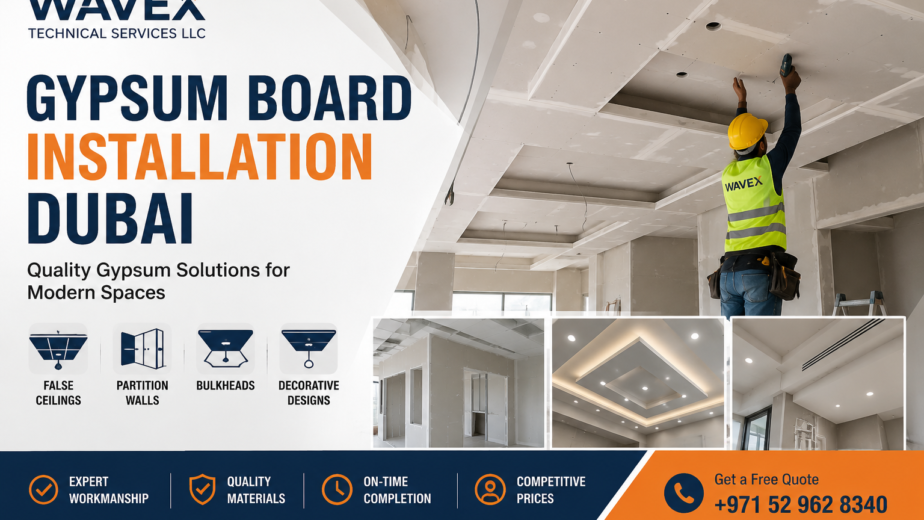
Wavex Technical Services LLC provides gypsum partition and interior gypsum solutions for homes, villas, apartments, offices and commercial spaces in Dubai. Our team can assess your layout and recommend a suitable system based on the project requirements.
Learn more about gypsum partition walls in Dubai | Explore gypsum fixing services | Request a quotation