
Quick answer: A wall crack should be inspected before it is filled or painted. The repair method depends on whether the crack is cosmetic, caused by movement, connected to moisture penetration, or a sign of a wider building issue. Waterproofing is appropriate only after the likely water-entry route and substrate condition have been assessed.
Reviewed by the Wavex Technical Team · Updated September 2026. This guide is general information and is not a structural assessment.
Wall-crack warning signs
| Observation | Appropriate next step |
|---|---|
| Fine, stable surface crack | Check the substrate and prepare an appropriate cosmetic repair before repainting. |
| Crack with dampness, staining or peeling paint | Trace the possible water-entry route before sealing or coating the wall. |
| Crack that widens, returns or changes | Arrange a professional assessment rather than repeatedly filling the surface. |
| Wide, diagonal or stepped crack | Seek qualified structural advice, particularly when movement is suspected. |
| Crack near a roof edge, balcony or pipe penetration | Inspect adjacent joints, upstands, outlets and waterproofing details. |
Why cracks and water stains should be diagnosed together
The visible crack is not always the original source of moisture. Water may travel behind finishes or along construction joints before appearing on an internal wall or ceiling. Filling the visible line without checking the surrounding roof, balcony, bathroom, façade joint or pipe penetration can conceal the symptom without addressing the entry route.
A useful inspection records the crack location, direction, approximate width, surrounding finishes and any relationship to rainfall, plumbing use or air-conditioning drainage. Photographs taken over time can also help establish whether a crack appears stable or continues to change.
Cosmetic cracks, moisture-related cracks and structural concerns
Cosmetic surface cracks
Fine cracks may occur within plaster, filler or paint layers. A repair can involve opening loose edges, removing weak material, preparing the surface, applying a compatible repair compound, allowing it to cure and refinishing the area. The substrate must still be checked before the crack is treated as cosmetic.
Moisture-related deterioration
Damp patches, staining, blistered paint, salt deposits or softened plaster indicate that moisture needs to be considered. The inspection should examine likely entry points and drainage conditions. A suitable waterproofing system can then be selected for the actual surface and exposure.
Possible structural movement
Cracks that widen, reappear, run diagonally from openings, form stepped patterns, or occur with distortion should not be treated as a simple decorating problem. Wavex can inspect the visible condition, but suspected structural movement should be assessed by an appropriately qualified structural professional before repair work proceeds.
Inspection-led repair sequence
- Record the condition: Note the crack pattern, surrounding damage and when the issue appears.
- Check likely causes: Review accessible joints, wet areas, roofs, balconies, drainage points and service penetrations where relevant.
- Define the responsibility: Determine whether the work is cosmetic repair, waterproofing, plumbing, façade maintenance or requires structural advice.
- Prepare the substrate: Remove loose or unsound material and clean the repair area.
- Use a compatible system: Select repair and waterproofing materials according to the substrate, exposure and approved scope.
- Allow curing: Follow the applicable curing and protection requirements before finishing.
- Inspect before decoration: Confirm the repaired area is ready before plastering or painting proceeds.
Where waterproofing may form part of the solution
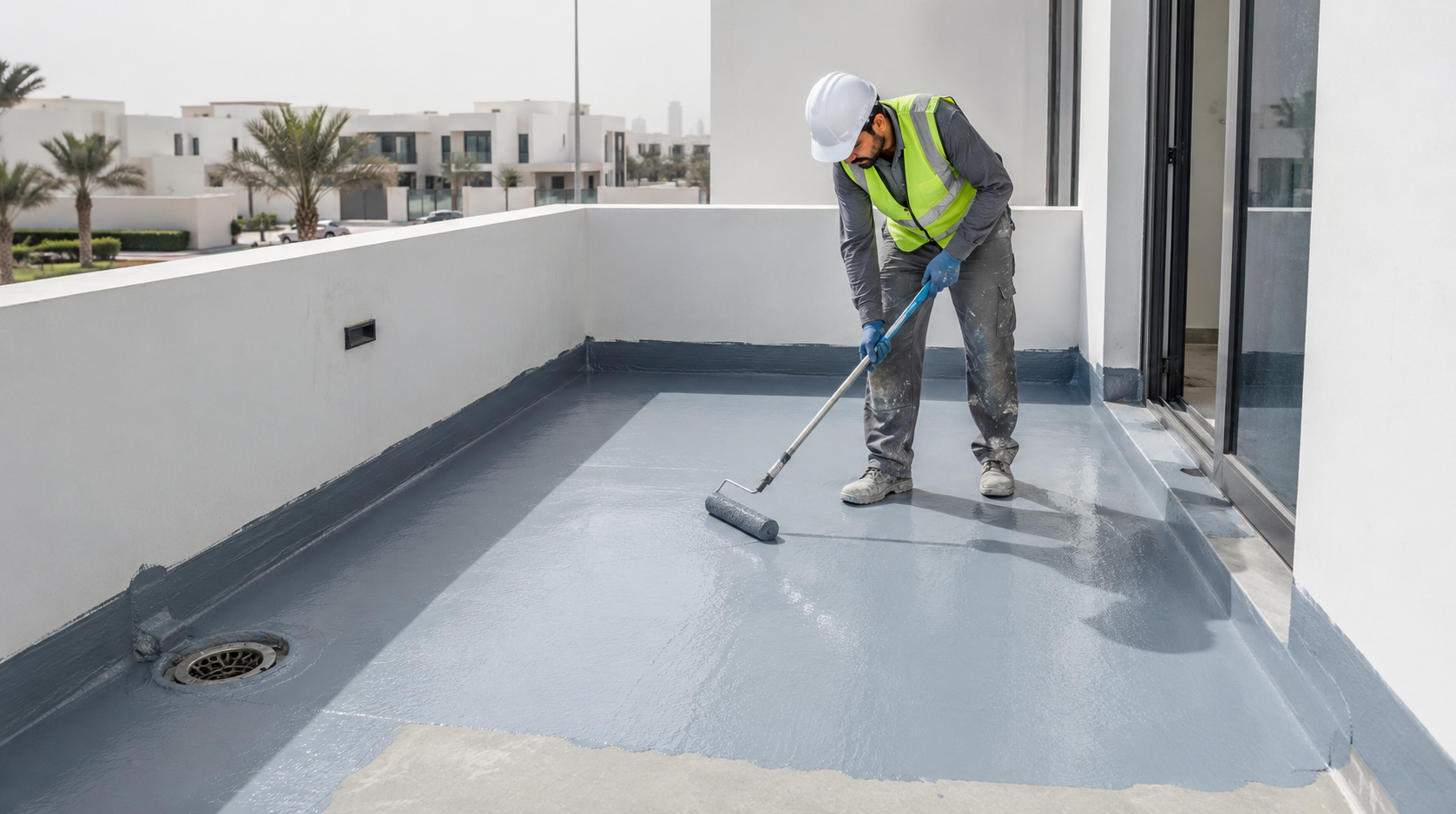
Waterproofing may be relevant where moisture originates from a bathroom or shower, balcony, terrace, roof, water tank, external joint or another exposed area. Details around corners, pipe penetrations, drains, thresholds and changes of plane are important because discontinuities can create leakage paths.
The proposed system must match the substrate and intended finish. For example, a wet area that will be tiled requires coordination between waterproofing, screeding, drainage falls and tile installation. Tiles and grout should not be treated as the waterproofing layer.
Questions to ask before approving repair work
- What is the likely cause of the crack or dampness?
- Is the crack considered stable, or is further assessment recommended?
- Which surfaces and junctions are included in the repair scope?
- What preparation is required before the repair or membrane is applied?
- Will screeding, drainage correction, tiling or painting be needed afterward?
- What curing, protection or testing is required before finishes are installed?
Arrange an inspection in Dubai
Wavex Technical Services LLC provides inspection-led wall repair, waterproofing, screeding, tiling and painting services in Dubai. For a scope-based quotation, contact Wavex with photographs, the property location, affected area and details of when the crack or moisture appears.
