
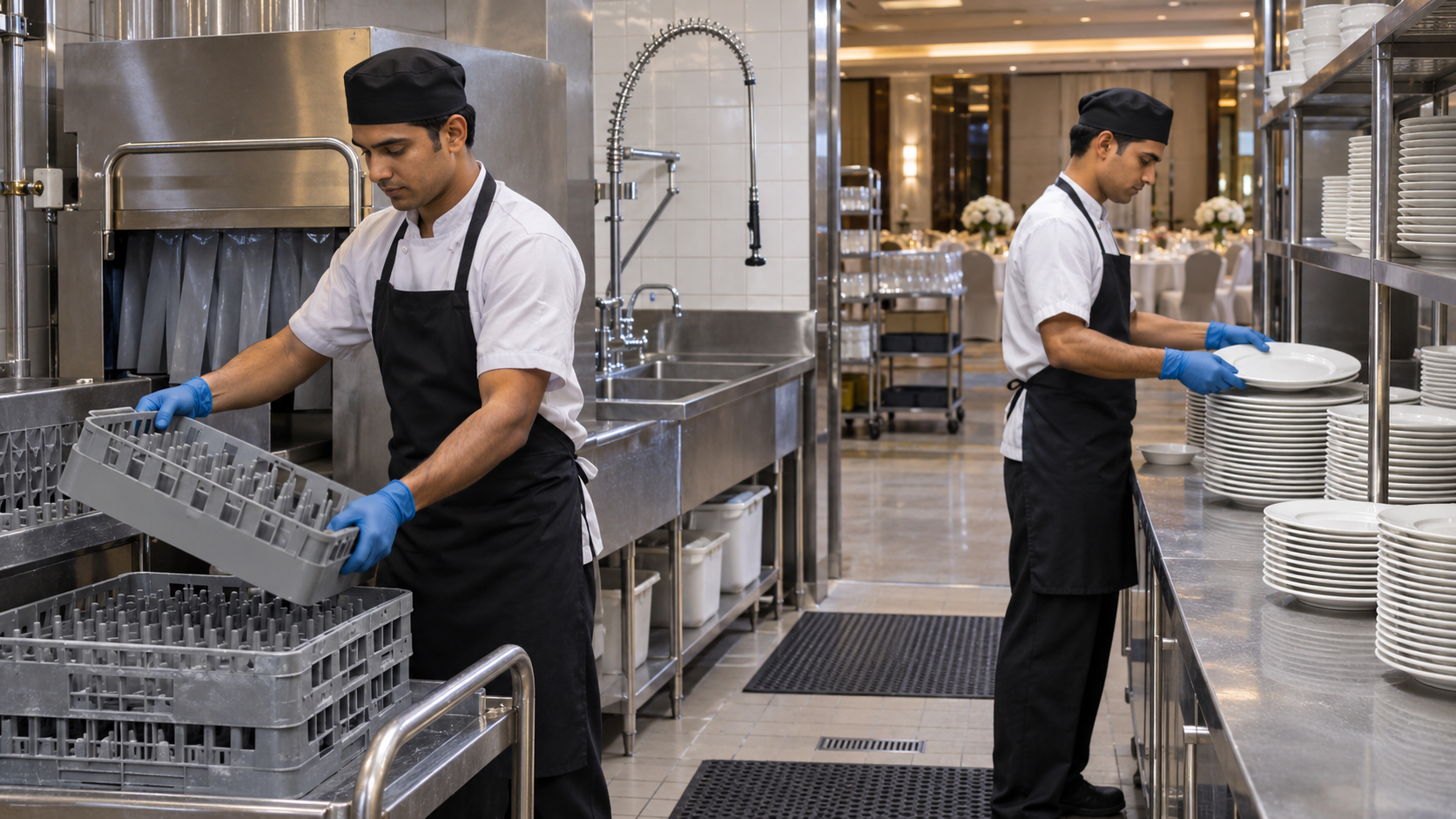
Two Dubai banquets can have the same guest count and need different stewarding plans. A plated dinner may send several hundred plates back in a short clearing window. A reception with small bites may create a steadier stream of glassware, trays and utensils. If another event follows in the same venue, selected items may need to be washed and restocked while the first event is still winding down.
Plan banquet kitchen steward staffing around when items return, how much the wash-up process can handle, and what the next service needs first. Use the event programme to identify pressure points before you request a team. This guide is for hotel banquet managers, caterers and venue operators preparing a staffing brief in Dubai.
Start with the event schedule and trace the return flow
Write down the times for supplier arrival, kitchen setup, guest arrival, each course or buffet period, room reset and venue handback. Then add the events the wash-up team actually experiences. A dinner scheduled to finish at 9 p.m. may send the largest load to the wash area during dessert clearing. Pots and food pans might return later, once the kitchen has signed off the last service. Those waves can require different workstations and different coverage.
Ask the banquet supervisor when waiters will clear tables. In some rooms, they clear together after the host gives a signal. In others, they clear gradually as tables finish. Walk the route from the room to the wash-up area and note whether it crosses guest corridors, requires a service lift or shares space with food deliveries. A corridor or lift bottleneck changes the return schedule even when the dish machine has spare capacity.
Record any overlap with restaurant service, room service, another banquet or the next day’s breakfast setup. Ask the outlet managers which racks, trolleys and items they share. If a wedding and a conference both need the same glass racks, reserve enough for both activities or agree who receives the first clean batch. The stewarding team can then work against a known priority instead of interpreting requests in the moment.
Give each work area a clear owner
Start with the tasks that have to happen concurrently at the busiest point. One steward may be needed to receive and sort items while another keeps racks moving through the machine. A third person may be needed to unload and return clean equipment. The venue may have a separate pot wash area or an approved glasswasher. The supervisor should decide which duties can be combined safely when traffic is light and which need dedicated coverage during a rush.
| Work area | What to include in the brief | Question to resolve |
|---|---|---|
| Dirty return | Drop-off points, sorting bins and rack types | Who redirects returns when the area is full? |
| Dishwashing | Permitted equipment, loading sequence and operator induction | Who responds if the machine stops? |
| Pot wash | Pans, trays and utensils that need dedicated handling | Which items need to go back to the chef first? |
| Clean return | Storage points, trolley routes and priority batches | Who verifies that the next event has its stock? |
| Close-down | Equipment shutdown, work-area cleaning and handback | Who checks completed duties and signs off? |
Use task names that supervisors and agency staff recognise. “Support the banquet” leaves room for disagreement. “Receive trays at the service lift, sort plates into designated racks, and tell the stewarding lead when the return area reaches its marked limit” describes a position someone can start with. The same approach helps when you instruct the front-of-house team where to put items and whom to contact.
Estimate throughput from a trial, then check the whole line
When available, use a timed observation from a comparable event or run a short trial under the planned conditions. Count racks completed over a meaningful period. Include time spent sorting, loading, unloading and getting racks ready for another cycle. The manufacturer’s maximum machine speed may be useful for maintenance planning, while observed throughput gives the event team an estimate of what the full process can sustain.
Suppose a course produces 360 plates over 30 minutes. At an assumed 18 plates per suitable rack, that is 20 plate racks. If trays and bowls need six more racks in the same window, the wash-up team faces 26 racks. If a previous trial showed 18 racks can move through the line in that half-hour, an eight-rack queue can remain when the next work begins. These numbers are illustrative. Use your actual racks, capacity, item mix and layout.
First locate the delay. If the machine stands idle waiting for sorted racks, receiving or loading support may help. If full racks queue while the machine runs continuously, adding another loader may have little effect. Consider staging returns within the venue’s approved capacity, using another approved station if available, or agreeing a later deadline for low-priority items. If clean equipment accumulates downstream, assign someone to collect it before that queue slows the machine.
Measure the most restrictive item separately. The team may turn plates around easily while large gastronorm pans need a dedicated area and more handling time. Glassware may have different racks and a separate route. An average across the full shift hides those shortfalls. Ask the chef and service supervisor which items are essential for restarting work if only part of a batch can move on time.
Work backward from the next room’s setup deadline
For back-to-back events, first list the equipment that must be available before the second room opens. Include the quantity, where to deliver it, and when the banquet team needs it to finish setup. If a second room requires 120 wine glasses by 9:15 p.m., tell the wash-up lead how many are already in reserve. The remaining quantity is the one that needs a timed return, and the team can schedule it against other commitments.
Use a simple priority board with item, quantity, due time and delivery destination. Assign one supervisor to change priorities after service begins. Waiting staff, chefs and banquet managers may all have legitimate requests. The stewarding lead needs a way to settle conflicts while keeping the rest of the team focused. A radio call can flag a change and the board can record the agreed decision.
Keep standby inventory visible. An extra rack of glasses only helps if the team knows where it is and someone can release it. Mark what is reserved for each event and confirm any borrowing with the responsible supervisor. Count items at transfer points where losses tend to occur, such as between a function room, kitchen and back-of-house store. When a shortage is discovered early, the venue has more options to adjust.
Example shift for two evening functions
Consider a 180-guest plated dinner followed by a smaller reception in another room. The dinner finishes dessert at roughly 8:30 p.m. and the reception needs glasses and serving pieces in place by 9:15 p.m. The venue has one banquet dish line, an approved separate pot wash area and an outlet that also uses some banquet racks. The operator needs to protect the reception’s setup time and still complete a full close-down. This is a planning example, not a recommended staffing ratio.
- Before service: The banquet stewarding lead checks rack availability and confirms the reception stock with the room supervisor. The front-of-house captain explains the clearing route and names the person who can slow returns if the service lift backs up.
- During dinner: Staff log the approximate time each large batch starts returning. If the reception depends on glasses from the dinner, the lead identifies those racks early and confirms the approved wash and staging route.
- During the overlap: One staff member handles clean delivery while the machine and dirty-return stations stay covered. Pans that are not needed again can wait in the designated area if the venue’s capacity allows. The chef confirms which cookware needs immediate attention.
- After the reception opens: The room supervisor confirms that priority equipment arrived. The stewarding lead checks remaining loads and revises break or relief coverage if the closing workload has shifted.
- At handback: The team reconciles outstanding racks, records damaged items, completes agreed cleaning and conveys unresolved issues to the venue supervisor.
When you compare roles for this example, separate food preparation from stewarding. Wavex’s kitchen helper staffing service covers enquiries involving supervised preparation and station support. The stewarding brief should identify wash-up responsibilities. If you also need front-of-house cover, send a separate scope for waiter and waitress staffing so clearing duties and collection points are agreed on both sides.
Write the access and induction notes before the first shift
Send the supplier the venue’s service entrance, arrival window, sign-in location and on-site contact. Explain whether staff must register in advance or use a particular lift. A diagram or simple route description can help in venues with separate kitchens, several loading bays or multiple banquet rooms. Include the time between arrival and the first scheduled duties so the supervisor can complete the site briefing.
The venue should identify which equipment and products staff may use, who gives the induction and where instructions are posted. The stewarding lead should show the dirty and clean routes, the return points for glassware and sharp items, and the process for reporting a spill, breakage or equipment fault. If staff will work in more than one outlet, explain any local differences before they move.
Agree which items the client will supply and check stock before service. For instance, several workers assigned to wash-up cannot make up for missing racks, damaged trolleys or a full clean storage area. The same is true of a shortage of bins or a lack of spare approved equipment. Note who can resolve these problems and where staff should hold material while waiting for a decision.
Keep break coverage and close-down in the staffing brief
A roster can look fully staffed on paper and have uncovered tasks if breaks cluster around the same clearing window. Decide which positions need continuous cover and who takes over when that person steps away. Stagger breaks around the actual programme, leaving a plan for delayed courses or late guest departures. The supervisor can make adjustments on-site while following the agreed working arrangements.
Define the end of the assignment in terms of duties as well as time. A function may end at 11 p.m. and still have trays returning from several rooms afterward. Include time for the last load, return of clean racks, waste handover and work-area cleaning. If porters or an overnight team take over any tasks, name that point in the plan and record what remains for them.
Set a named handback owner. The closer needs to know who checks the dish area, who confirms the stock returned and who documents any faults. When the same venue hosts events regularly, save the final notes. They can reveal that delays come from recurring sources, such as late collection of empty racks, rather than the number of staff booked.
Compare staffing quotations on the same duties and hours
Request prices against one written brief. Give each supplier the same event dates, arrival times, required end times, venues and role split. Ask how any extra time is handled if the function runs late. Confirm what is included in the quoted service and which arrangements the venue must handle separately, including on-site supervision, equipment and induction. Availability and commercial terms should be confirmed for your dates.
Ask what information the supplier needs if an assignment changes. A move to another ballroom may change the collection route and travel time. A switch from plated service to a buffet can shift the item mix and when pans return. A revised brief can prevent staff being placed against a schedule that no longer matches the work.
For a recurring programme, compare suppliers against specific operating expectations. Ask how they handle roster changes, who receives the updated schedule and how supervisors report attendance or tasks that fell outside the agreed scope. Keep this information alongside the estimate of work volume so the venue can review both cost and service coverage.
Use a short post-event review to improve the next roster
Capture the busiest return window, the longest queue and whether the priority items arrived on time. Ask the front-of-house lead where returns waited and ask the stewarding lead where the wash-up flow slowed. Record a specific change to test next time, such as a separate glass return point or a pre-positioned clean trolley, along with the person who will set it up.
Ten minutes of consistent notes can be more useful than a general impression that a shift felt busy. Collect the final guest count, service format and any late changes so you can compare similar events. If a shift ran beyond its estimate, write down whether the trigger was an equipment fault, late room clearing, an unexpected stock transfer or a closing duty that was omitted from the brief.
Plan separately for plated dinners, buffets and receptions
For a plated dinner, note whether the room clears course by course or table by table. A coordinated clear can send a dense load of similar items to the same point, which makes it easier to estimate rack demand but increases the chance of a short queue. Agree where service staff can stage racks during that period and how the stewarding lead will signal that the receiving area is ready for another trolley.
For a buffet, look at the rhythm of food replenishment as well as plate returns. Service pans may come back at the moment the chef needs a fresh set. The venue can record which pans are immediately required and which can wait for the next wash cycle. At closing, the last buffet breakdown may send more serving equipment back than the earlier course counts suggest. Allow a specific window for those items and discuss who clears serving stations.
For a reception, glassware and small service pieces may dominate the workload. Identify where used glasses are collected and where empty racks can wait without blocking guest access. Give the lead a threshold for requesting more clean stock before the service area runs low. The collection staff should also know who handles damaged items under the venue’s procedures.
Information your event team can use in a reusable staffing brief
Keep one blank form for each venue layout. Include the service entrance, named supervisor, rooms used, clearing routes, wash areas and agreed storage points. Update guest counts, service format, item mix and setup deadlines for each event. When the same team works at different properties, confirm which instructions apply at the current location. A familiar event name tells staff little about a changed room or a new collection point.
Make the load estimate visible to the banquet team. For example, record the most demanding 30 minutes, what is expected to return then and which outlet needs clean equipment before the next wave. Keep a column for constraints observed at the last event so the next supervisor can check whether they still apply. If you routinely have a queue beside one door, test an approved staging change before including extra trolley runs in every staffing request.
Write down who owns changes on event day. If the banquet timeline runs 25 minutes late, the stewarding lead should know who can revise the promised handback time and who coordinates with the next user of the room. A good change note records the new time, the stations affected and the person confirming the arrangement. This matters most when the late team and the incoming team work from different schedules.
For repeat events, attach the previous handback notes to the next enquiry. Mark any completed adjustment, such as reserving more glass racks, and identify the issue you still want the supplier and the venue team to review. This makes it possible to compare proposals against the operating conditions that actually recur. For a one-off event at a new venue, ask for a brief walkthrough and use photographs or a floor plan approved by the venue to explain unfamiliar routes.
Before you send the request, check that each task has a location, a time window and a named reporting line. If several teams must approve a change, identify who communicates the final decision to the stewarding lead. A single handover contact helps the crew act on the latest agreed instruction during service.
Frequently asked questions about banquet steward staffing
How many kitchen stewards do I need for a Dubai banquet?
Start with the peak clearing window, then count the jobs that must happen simultaneously. The service style, equipment, route and closing duties all affect coverage. A venue that knows its effective rack throughput can use that figure with the event timeline to prepare an initial request for review.
Can one person cover both dirty returns and clean stock delivery?
During quieter periods, the venue may be able to combine duties if its procedures allow and the routes remain clear. During an overlapping service, dedicated clean return coverage may be needed to keep priority equipment moving. Ask the supervising team how they want these tasks assigned.
What should I send Wavex for a stewarding quotation?
Include the venue, event date, guest count, menu or service format, equipment and work areas, expected working hours and duties. Add any overlap with other events and the time the area must be handed back. For regular cover, send a typical week and note seasonal peaks.
Planning banquet stewarding in Dubai? Share your event schedule and wash-up brief with Wavex kitchen steward staffing or contact Wavex to discuss coverage and request a quotation.
